


Most price guides answer this with a range so wide that it helps nobody plan a budget. You read that a virtual assistant (VA) costs somewhere from $4 to $80 an hour. That range is true, and it is also useless when you have a real number to set this quarter.
This guide does 3 things that those price pages skip. It names the published price of each service instead of a vague band. It turns each plan into one number you can compare, which is the cost per hour of real work. It also shows the fees and expiry rules that hide under the headline rate.
ZipRecruiter puts the average US VA rate at $24.40 an hour as of 18 August 2026. Hold that one number in mind as you read the rest of this page. Almost all the plans below sit either at a discount or a premium against it.
When evaluating budgets, understanding the fractional executive assistant cost structure helps you calculate the immense ROI of strategic operational support.
On this page
How much does a virtual assistant cost?
A virtual assistant costs $10 to $75 an hour in the United States in 2026. Offshore help starts near $4 an hour. US agencies charge the most because the price covers vetting, sick cover, and a manager.
Upwork reports a median freelance rate of $13 an hour across its whole global pool of workers. BELAY, a US only agency, quotes $30 to $75 an hour for that very same job title. Both figures are accurate, and the gap between them is the whole story of this page.
VA pricing splits along 3 lines that matter far more than any other factor you will read about. These are where the person sits, how deep the skill runs, and which plan shape you buy. Our page on what is a virtual assistant covers the role itself in plain terms.
The 3 forces that set virtual assistant cost are listed below.
- Location: location moves the rate more than anything else, because a Manila desk and a Denver desk carry quite different living costs.
- Skill Depth: skill depth splits an Upwork data entry hour from an executive support hour, and that gap runs near $26.
- Plan Shape: plan shape decides whether you buy hours, buy finished tasks, or buy one full seat each month.
What do virtual assistants charge per hour in the United States?
ZipRecruiter puts the US average at $24.40 an hour, or $50,749 a year, as of 18 August 2026. The 25th percentile sits at $41,800 a year, and the 90th climbs to $65,500.
Upwork shows a lower centre because its market mixes each country in the world into one pool. Its median lands at $13 an hour, and most contracts there settle between $10 and $20.
Read those 5 rows as one picture not as 5 rival answers to one question. A US freelancer you manage yourself sits near $24 an hour, while managed agency help lands closer to $40.
How much does a virtual assistant cost per month?
VA cost per month runs from $35 for a few small tasks up to $3,000 for a full time seat. BELAY quotes $1,200 to $3,000 a month for part time support based in the United States.
A price per month means something only once you know the hours sitting behind it. A $1,999 plan can buy 80 hours or 160 hours depending on the firm, and that gap doubles your real rate.
Watch what happens as you read down that final column of the table above. The price per month climbs by a factor of 50, yet the cost per hour falls by two thirds.
Firms that want a named seat, not a task queue, often start with plain administrative support and then add work later.
How do virtual assistant pricing models differ?
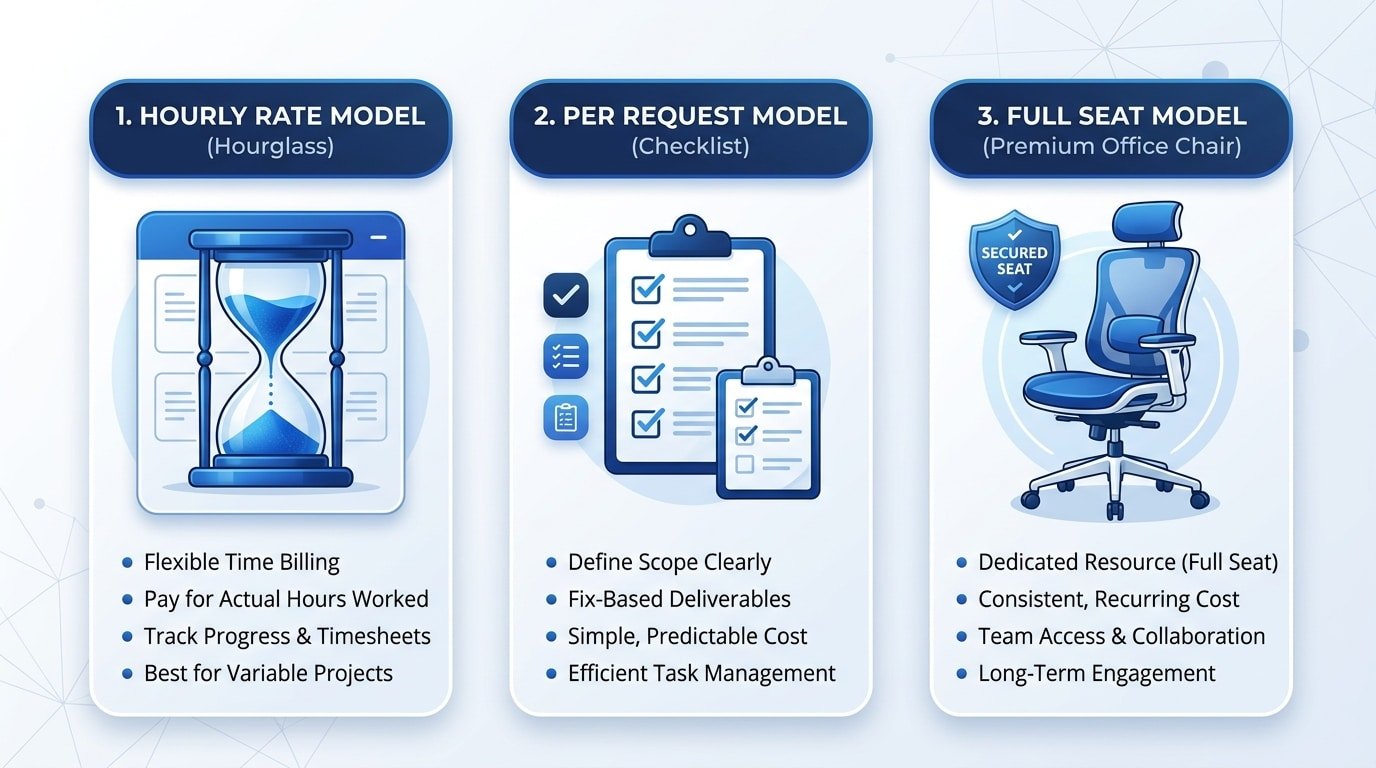
Four pricing models cover almost all VA offers sold on the US market today. These are pay as you go hourly work, hour blocks, per request plans, and a full seat by the month.
Each model shifts risk between you and the firm in a different way that is easy to miss. Hourly work puts that risk on you, because a slow worker simply bills you for more hours.
The 4 virtual assistant pricing models are listed below.
- Hourly Rate: hourly rate work bills just the minutes worked, which suits any job with a volume you cannot predict.
- Hour Block: hour block plans sell a set number of hours each month at a lower rate than pure hourly work.
- Per Request: per request plans sell a count of small finished jobs instead of time, with a hard cap on each job.
- Full Seat: full seat plans buy one person for the whole month, and they carry the lowest cost per hour by far.
Most buyers pick the wrong model on their first attempt at this decision. They choose an hour block because it looks cheaper, then lose a third of the hours they already paid for.
What does a per request plan cost per hour?
Per request plans look cheap until you turn the count of jobs into hours. Fancy Hands sells 3 requests for $35, and it caps a standard request at 20 minutes of work.
That 20 minute cap is the number nobody in this market converts for you. Three requests of 20 minutes each equal 1 hour of work, so the small plan really costs $35 an hour.
A per request plan therefore prices out near a US freelance rate, not below it. It still wins for anyone who needs help a few times a month and hates managing people.
Fancy Hands does let unused requests roll over for as long as you stay a paying member. That single term saves the model from the waste problem covered in the next section.
Do unused virtual assistant hours roll over or expire?
Roll over rules change your real rate far more than the sticker price ever does. Buy 20 hours, use just 14 of them, and a $38 rate quietly becomes a $54 rate.
No competing price guide compares these terms side by side, yet they decide what you truly pay. The rules differ sharply between firms whose headline prices look almost identical.
Work that waste sum once by hand and you will never forget to ask about it again. Divide the plan price by the hours you truly used, not by the hours the plan promised you.
The 3 roll over questions worth asking before you pay are listed below.
- Expiry Window: expiry window tells you how long an unused hour keeps its value, and 30 days is the common answer.
- Roll Over Cap: roll over cap limits how many hours can stack up, and some firms quietly hold that cap at one month.
- Refund Rule: refund rule covers what happens to your banked hours when you cancel, which is usually nothing at all.
What fees sit on top of the hourly rate?
Setup fees, lock in terms, overage rates, and platform fees all sit above the price you were quoted. Prialto charges a $250 setup fee and holds you to 90 days for each unit.
Delegated sells extra hours at $60 each once your included plan hours have run dry. That single overage rate sits $15 above what many US freelancers charge for that same hour.
Upwork adds a fee of 3% to 5% for clients on its Basic plan, plus a contract start fee. A $24 hourly rate therefore lands nearer $25 once the site has taken its own share.
None of these 4 lines appear in the headline number that any firm puts on its pricing page. Add them together before you compare two quotes, or you will end up comparing the wrong pair.
How much does a virtual assistant cost by task type?
Task type moves the rate by roughly $25 an hour from the bottom band up to the top one. Upwork groups its own market in 3 clear tiers based on the work involved.
That same pattern holds across other firms even when the exact numbers shift a little. Work that needs judgement costs more per hour than work that only needs care. A senior title such as administrative coordinator sits at the top of that scale.
Splitting your task list across two rate bands is the easiest saving on this whole page. Send the filing and inbox work to a lower band, and keep the judgement work at the higher one.
Routine data entry belongs in that first tier, while social media management normally sits in the second one.
How does experience change what a virtual assistant costs?
Experience roughly triples the rate from entry level to executive support on that same platform. Upwork puts entry admin work near $12 an hour and executive assistant work near $50.
Paying for experience only makes sense when the work in front of you truly needs it. Someone who costs 3 times more must remove 3 times the load, and inbox work rarely allows that.
Wing prices its own tiers in the open, which makes this pattern easy for any buyer to see. Entry level, mid level, and expert level each add roughly $300 a month to the bill.
The honest test here is a simple one that you can run in a single minute. Ask how many hours of your own week the hire gives back, then divide the monthly fee by those hours.
Our guide on how to hire a virtual assistant covers the screening questions that reveal real experience.
How much cheaper is an offshore virtual assistant?

Offshore assistants cost roughly a third of the US rate for that same task list. Published offshore rates start near $4 an hour and settle from $9 to $19 for managed full time work.
Wishup places the offshore band at $4 to $10 an hour against a US band of $30 to $75. MyOutDesk splits the managed market by region, and the spread runs wider than most buyers expect.
Cost is one half of that decision, and the other half decides whether the hire works out. Time zone overlap, spoken accent, written English, and data rules all shape which region truly fits.
What does an in house assistant really cost?
An in house assistant costs far more than the salary line on a job post suggests. The Bureau of Labor Statistics puts the median wage for secretaries and administrative assistants at $47,460 a year.
That one figure covers the wage and nothing else at all. The same agency reports that benefits made up 30.1 percent of total pay for private industry workers in March 2026.
Apply that share to the median wage above and the whole picture changes in one step. Pay and benefits together reach near $67,900 a year, before you buy a desk, a laptop, or one software seat.
Set that annual figure beside a $1,988 monthly seat and the gap becomes hard to ignore. The full time remote seat costs near $23,900 a year for a similar volume of work.
Which pricing model wins at your monthly hours?
The cheapest model changes as your hours grow, and no firm will ever tell you where those lines fall. Per request plans win below 5 hours, freelance hourly wins in the middle, and a full seat wins at 160.
The table below uses published prices, with no guesswork of any kind mixed in. Every rate is simply the plan price divided by the hours or minutes that the plan includes.
One row in that table surprises almost all buyers who see it for the first time. A US managed hour block at $37 to $39 costs more than hiring a US freelancer on your own.
You pay that premium for vetting, for cover during illness, and for a manager who fixes problems fast. Decide for yourself if those 3 things are worth $13 an hour to your business.
Our own pricing plan shows where a managed seat lands against the bands in the table above.
How much does a virtual assistant save a small business?
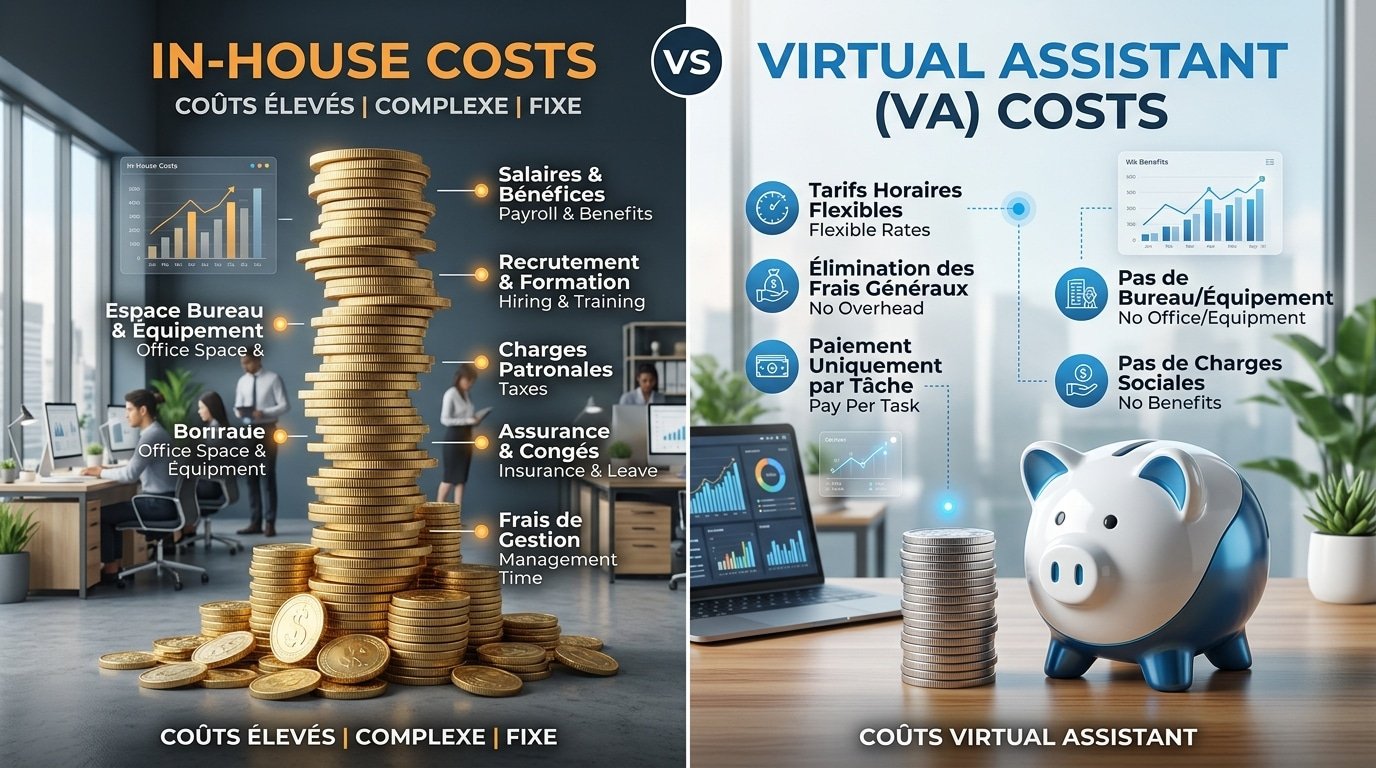
Savings come from the gap between a fully loaded employee and an hour you actually get billed for. An in house assistant costs near $67,900 a year in pay and benefits alone.
A full time offshore seat at $1,988 a month costs $23,856 across a full year of work. The gap runs near $44,000, and that sum still ignores desk, software, and office space.
Part time buyers see a smaller saving, but they see it far faster than anyone hiring in house. Twenty hours a month of US freelance help costs near $488 at the average US rate.
Demand data points the same way that the price data does. Upwork reported that ecommerce management work grew 130 percent year over year in its In-Demand Skills 2026 report.
Read our breakdown of the in demand virtual assistant services to see which tasks buyers hand over first.
How do you cut virtual assistant cost without losing quality?
Cutting cost works best when you move work down a tier, not when you squeeze a rate. A cheap hour spent on the wrong task costs you more than a fair hour on the right one.
Every buyer with a year of experience arrives at the same short list of moves. These 5 moves lower your spend without harming the output that comes back to you.
The 5 ways to cut virtual assistant cost are listed below.
- Task Split: task split sends routine work to a lower rate band and keeps judgement work at the higher band.
- Written Process: written process cuts the hours a new hire burns while they learn how your systems work.
- Roll Over Plan: roll over plan protects the hours you already paid for during a quiet month of low demand.
- Batch Work: batch work groups similar jobs together so that the person switches between contexts far less often.
- Trial Month: trial month proves the fit before you sign a lock in term or hand over a setup fee.
Firms new to this model often start small and scale once the process sits in writing. Our page on how it works sets out that first month in order.
What should you check before you agree to a virtual assistant price?
Nine contract terms decide what a quoted price will really cost you across a full year. Each one sits in the paperwork rather than on the pricing page, and each one is worth asking about.
Take the list below into your first sales call and ask each question out loud. The answers will move your real cost by more than any discount you could ever negotiate.
Does the quote name the hours or only the tasks?
A monthly price with no hour count cannot be compared against anything else. Wishup and MyOutDesk both sit near $2,000 a month, and both include roughly 160 hours of work. Ask for that hour figure before you set any two quotes beside each other.
Do unused hours carry into the next month?
Time Etc rolls unused hours forward, while Delegated holds them for just 30 days. That one difference can swing your effective rate by 40 percent during a quiet month. Get the answer in writing, not from a friendly sales call.
What does an extra hour cost after the plan runs out?
Delegated charges $60 an hour once your included plan hours have been used up. Overage rates commonly run $50 to $65, which is double the US freelance average. Ask if you can buy top up hours in small blocks, not large ones.
Is there a setup fee or a lock in term?
Prialto charges a $250 setup fee and holds each unit to a 90 day minimum. Time Etc charges no setup fee at all and asks for no notice period on cancellation. Those 2 policies describe quite different levels of commitment from you.
Who pays the platform or payment fee?
Upwork charges clients a marketplace fee of 3% to 5% on its Basic plan. Agencies normally fold that same cost into the rate they quote you instead. Confirm which side carries the fee before you treat two rates as equal.
Does the price cover a backup assistant?
Prialto includes a backup assistant and an engagement manager inside its unit price. A solo freelancer has no cover, so illness or a holiday stops your work completely. Decide what one lost week of admin support would cost your business.
What happens to the price if the fit fails?
Ask whether a replacement restarts any lock in term or triggers a second setup fee. A free swap is worth little if the clock resets and you pay for onboarding twice. Good firms state the replacement policy in plain language before you sign.
Are the hours worked in your time zone?
Prialto runs a 9 to 6 window in both US and UK time zones. Offshore firms vary widely on this point, and overlap hours often carry an extra charge. Match the working window to the hours when you actually need fast answers.
Does the rate rise after the first year?
Start rates and yearly rises rarely appear anywhere on a public pricing page. Ask what the rate becomes in month 13, and whether a longer term locks it in place. Read our page on virtual assistant services to see what a standard scope covers.
4 comments